
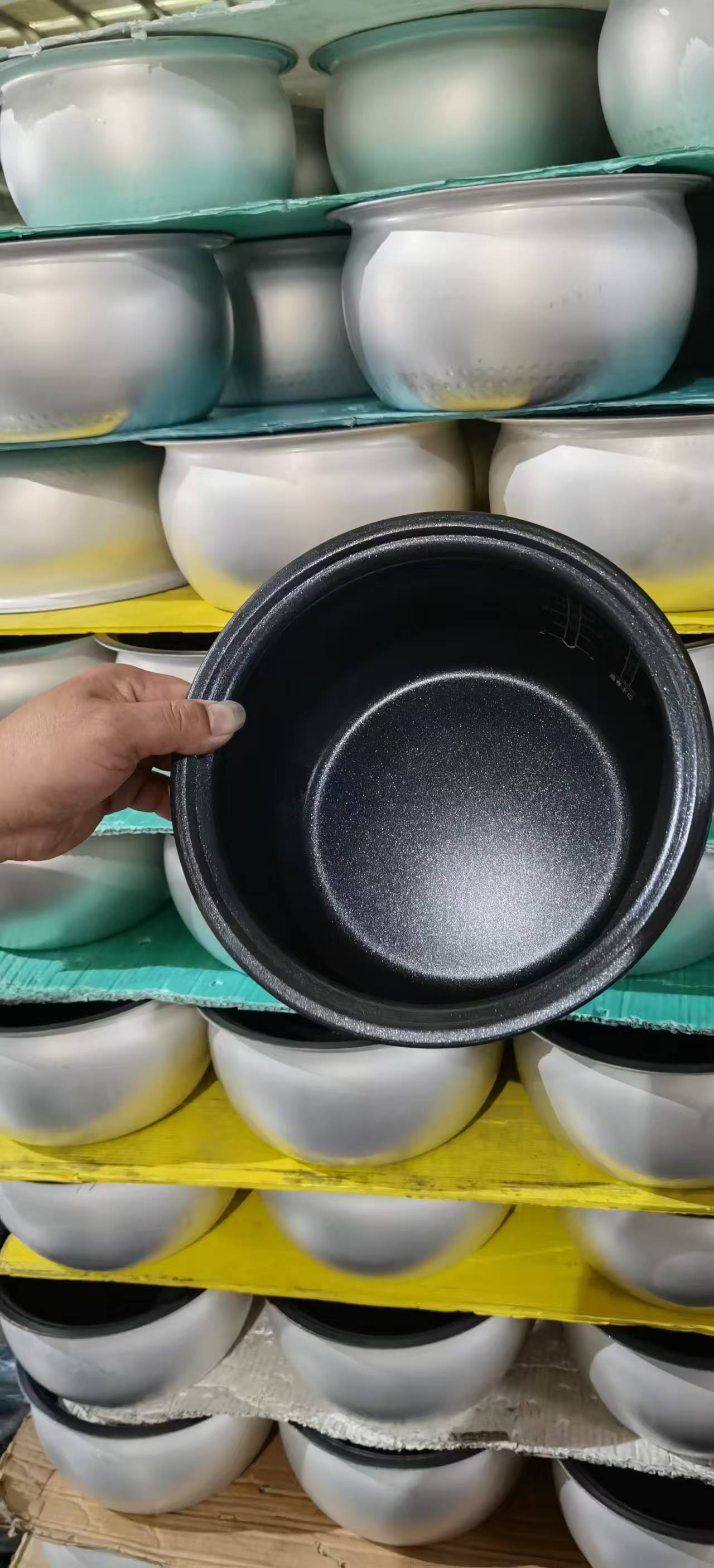
Start with the Finished Product Specification
Send potential suppliers a drawing or representative sample of the component you intend to coat. Include the substrate grade, existing surface condition, and which areas require coating.
Avoid a brief that says only “aluminum cookware, black non-stick finish.” Instead, identify the exact component and explain how you intend to assess it.
The following purchasing brief provides a practical starting point:
| Specification item | Information to provide or request |
|---|---|
| Finished product | Rice cooker inner pot, frying pan, bakeware, or another application |
| Substrate | Exact metal or alloy grade, manufacturing method, and surface condition |
| Coating location | Food-contact interior, exterior, or both |
| Appearance | Approved color reference, gloss, texture, and acceptable variation |
| Intended use | Cooking conditions, cleaning method, and expected use pattern |
| Production setup | Surface preparation, application equipment, and available oven conditions |
| Acceptance criteria | Agreed performance tests, appearance limits, and required documentation |
| Commercial requirements | Forecast consumption, destination market, packaging, and delivery schedule |
Have purchasing, production, and quality teams review this brief together. In particular, ask the production team to confirm that the proposed process can be trialed on the equipment actually available.
Compare Coating Systems, Not Just Marketing Names
PTFE-based and sol-gel ceramic coatings are distinct non-stick coating platforms. Their performance characteristics and appropriate testing programs differ, so they should not be treated as interchangeable products with different names. Industry testing guidance distinguishes between these systems when assessing abrasion, heat exposure, chemical resistance, and food-release performance.
Ask each supplier to identify the proposed coating chemistry and explain why it fits your application. Request the exact product codes for the complete system, including any primer, intermediate layer, and topcoat.
For a coating described as “graphene-enhanced,” ask an additional question: What is the underlying coating system, and what comparative test supports the claimed improvement?
Similarly, where your customer specifies a restriction on particular substances, request a product-specific declaration and supporting evidence. Do not approve a formulation from a descriptive product name alone.
The purchasing objective is not to select the most impressive label. It is to select a documented coating system that meets an agreed product brief.
Review Application Requirements Before Ordering Samples
Request a current technical data sheet and an application recommendation for your substrate.
Ask the supplier to specify the proposed surface preparation, number of coats, dry film thickness range, application method, and curing schedule. Keep the curing schedule and intended service conditions as separate fields in your approval record.
For products supplied in multiple components, also confirm the mixing instructions, usable working time after mixing, and storage requirements. Your technical team should review these instructions before conducting a trial.
During the quotation stage, clarify who will apply the sample coating. A supplier-prepared sample can be useful for reviewing the proposed finish, but require a separate trial on your own production process before approving routine supply.
Use the trial to record actual material consumption, process settings, inspection results, and any adjustments requested by the supplier. Keep those records with the approved product specification.
Test Food Release After Use, Not Only on a New Sample
A successful first cooking demonstration should be the beginning of evaluation, not the entire acceptance test.
Non-stick coating evaluation can include adhesion, abrasion, thermal exposure, and chemical resistance. For sol-gel systems in particular, published testing guidance emphasizes evaluating changes in food release alongside heat and chemical exposure, rather than relying only on surface hardness or scratch resistance.
Ask the supplier and your testing team to agree on a test sequence that reflects the product you will sell.
For a rice cooker inner pot, for example, propose an evaluation covering repeated cooking, cleaning, and inspection of the base and sidewalls. For frying pans, ask the laboratory to recommend a suitable cooking and durability test program for the intended claims.
In every test report, request the coating code, substrate, preparation method, film thickness, curing conditions, test method, and acceptance limit.
If two suppliers report different numbers of “cycles,” ask whether the test conditions and failure criteria are identical. Without that information, treat the figures as separate results rather than a direct ranking.
Check Food-Contact Documentation for the Intended Use
Food-contact evaluation depends on the intended application. The FDA’s reference information distinguishes between food types and conditions of use, including different temperature and processing conditions. A purchasing review should therefore look beyond a general statement that a coating is suitable for food contact.
Request documentation that identifies the exact proposed formulation and the scope of the evaluation. Ask your testing laboratory or compliance adviser to confirm which requirements apply to the finished article in each destination market.
During the document review, check whether the tested sample corresponds to the coating system, color, application conditions, and finished construction you plan to supply.
Also agree on a change-notification procedure. Before accepting a formulation or process change, require a review of whether the existing approval and supporting documents remain applicable.
Compare Cost per Accepted Piece
Use the production trial to calculate coating material cost against accepted output:
Coating material cost per accepted piece = Total coating material consumed × Purchase price per unit ÷ Number of accepted pieces
Include all purchased layers in the calculation. Where the system includes a primer and topcoat, do not compare the topcoat price alone against another supplier’s complete system.
For a broader manufacturing comparison, add surface preparation, application labor, curing energy, inspection, and coating-related rework or scrap.
Keep the comparison conditions consistent. Use the same component, agreed finish, production conditions, and acceptance criteria wherever practical.
Then review the commercial terms alongside the trial results: minimum order quantity, packaging size, remaining shelf life at delivery, lead time, and the procedure for investigating a nonconforming batch.
What to Include in a Coating RFQ
A useful request for quotation can read:
We are sourcing a non-stick coating system for the cookware component shown in the attached drawing. Please recommend a suitable system based on the specified substrate, application equipment, intended use, and destination market. Include the product codes, technical data sheets, application requirements, sample terms, relevant test documentation, packaging, minimum order quantity, lead time, and quotation. We will evaluate samples against an agreed production and testing plan before approving bulk supply.
Attach your specification and proposed acceptance criteria. Ask the supplier to identify any missing information before finalizing its recommendation.
Frequently Asked Questions
Should we approve a coating based on a coated test panel?
Use the panel for preliminary review, then require a trial on the actual component. Record the complete application process and evaluate the finished part against your acceptance criteria before releasing a production order.
Does good scratch resistance prove long-lasting non-stick performance?
No. Scratch resistance and retained food-release performance are separate evaluation questions. A suitable test program should assess both and include the relevant heat, cleaning, and chemical exposures for the coating system.
Discuss Your Cookware Coating Requirements
Hanze New Material develops coatings for rice cooker inner pots, ceramic coatings, and other customized coating applications, with OEM/ODM cooperation available. Share your substrate details, production conditions, and testing requirements to discuss a suitable development brief.